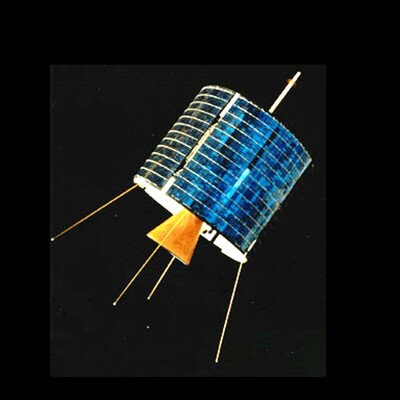
On July 4, the Chinese asteroid sample return and comet exploration mission Tianwen-2 will rendezvous with 469219 Kamoʻoalewa, a quasi-satellite of Earth, 40–100 m in diameter.

Over the next few months, the probe will study and map the asteroid, collect rock samples, deliver them to Earth in Nov 2027, and then continue on to rendezvous with the main-belt comet 311P/PanSTARRS in Jan 2035.

mp.weixin.qq.com/s/97RjX0XCVsY
en.wikipedia.org/wiki/Tianwen-2
#Science #Space
1/n
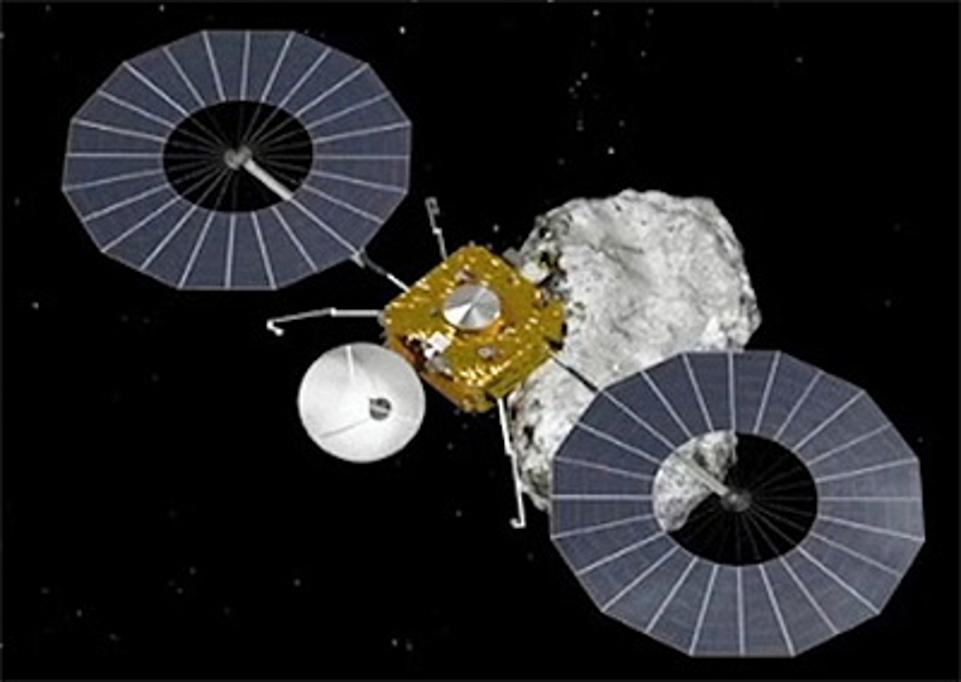
Graphif of Tianwen 2 and asteroid
CNSA
https://space.skyrocket.de/doc_sdat/tianwen-2.htm
ALT

Replying to @AkaSci@fosstodon.org

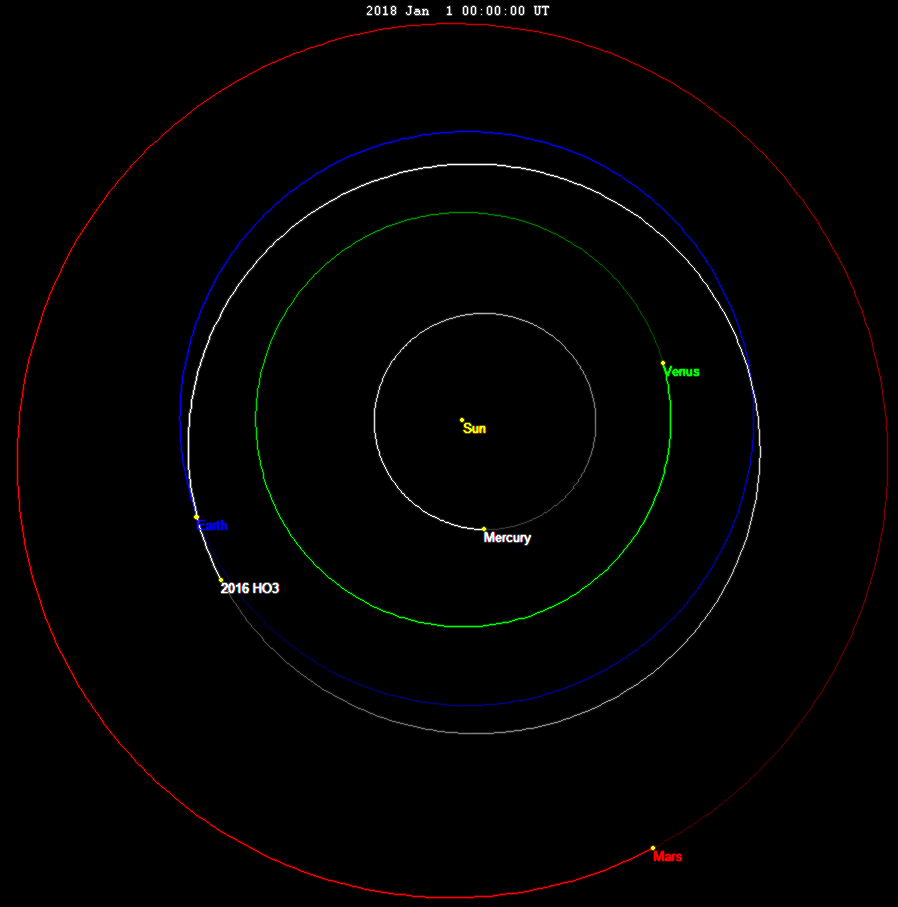
69219 Kamoʻoalewa (aka 2016 HO3) is a small near-Earth asteroid. At present, it is a quasi-satellite of Earth, in an Earth-like orbit around the Sun but remaining close to Earth.

Size: ~40–100 m
Rotation: 28 minutes
Orbit around Sun: 365-366 days
Distance from Sun: 0..9 - 1.1 AU
Distance from Earth: 38 -100 LD (Lunar Distance)

en.wikipedia.org/wiki/469219_K
#Science #Space
2/n

Orbit of Kamoʻoalewa in the inner Solar System
Credit: Tomruen
ALT

Replying to @AkaSci@fosstodon.org

Also, the JAXA Hayabusa2 spacecraft will fly by asteroid Torifune on Sunday July 5. It's objective is to test navigation systems for a future asteroid deflection mission.

See fosstodon.org/@AkaSci/11684163
#Space #Asteroid #Science
3/n

AkaSci 🛰️@AkaSci@fosstodon.org

Remember Hayabusa2, the plucky JAXA spacecraft that visited asteroid Ryugu in June 2018, scooped up some rock samples and returned them to Earth in December 2020?

It's still out there. It will fly by asteroid Torifune on Sunday July 5, at a relative speed of 5 km/s and a closest distance of 1 km. The data from this flyby will help accurately guide probes to impact and deflect small asteroids in future.

In 2031, Hayabusa2 will rendezvous with asteroid 1998 KY26.

global.jaxa.jp/press/2026/06/2
2/n

Replying to @AkaSci@fosstodon.org

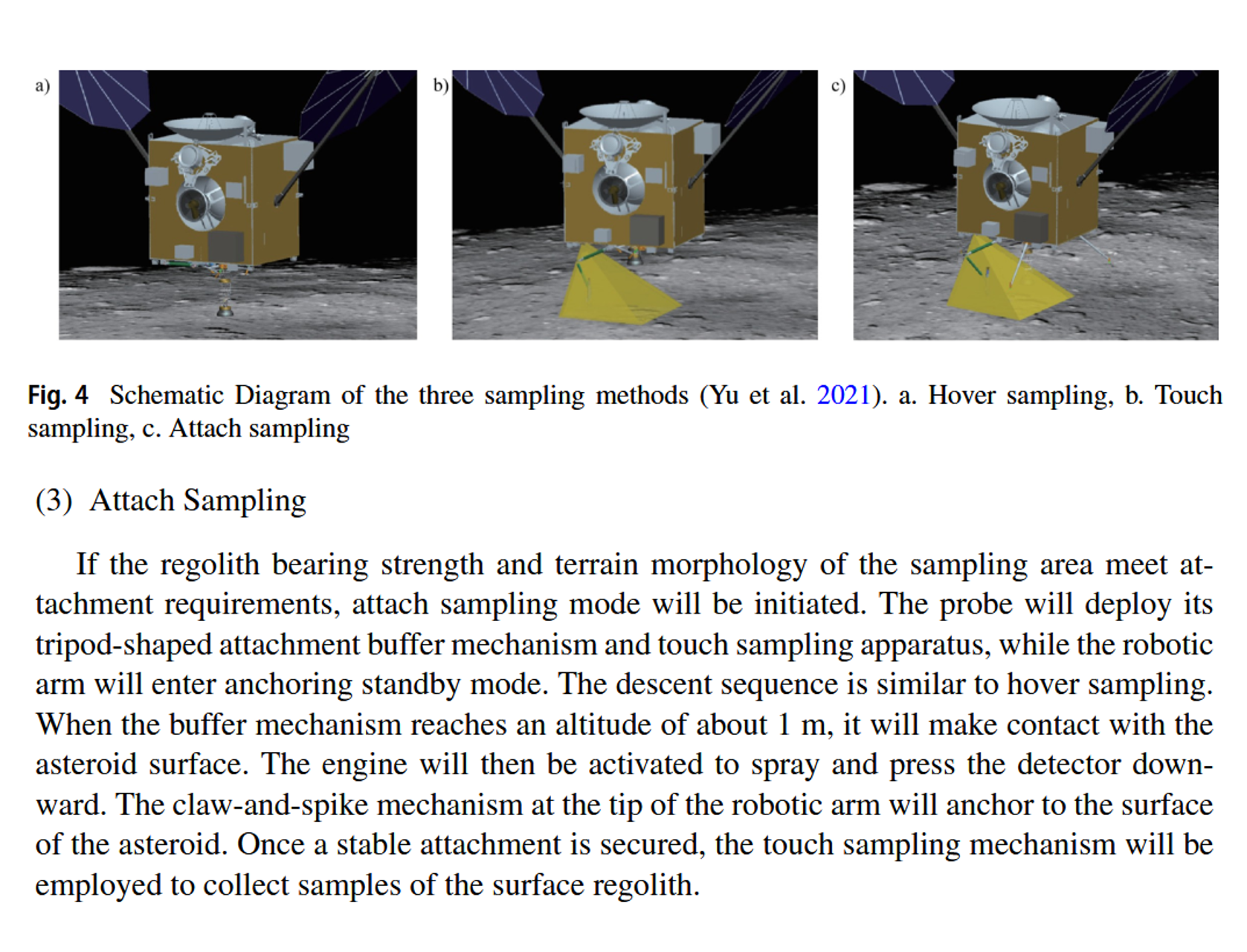
To collect rock samples from asteroid 69219 Kamoʻoalewa, Tianwen-2 will employ the touch-and-go sampling technique, used by Japan’s Hayabusa 2 and NASA’s OSIRIS-REx missions. A sampling head with rotating brushes and pressurized gas will be used to collect regolith samples.

In addition, an anchor-and-attach method will be employed, that will use 3-4 robotic arms to latch onto the asteroid’s surface before collecting samples using the touch sampling mechanism.

link.springer.com/article/10.1
4/n

1. Fig. 4 Schematic Diagram of the three sampling methods (Yu et al. 2021).
a. Hover sampling, b. Touch sampling, c. Attach sampling

2.  Description of attach sampling
ALT
Jul 4, 2026, 17:58 UTCen

Replying to @AkaSci@fosstodon.org

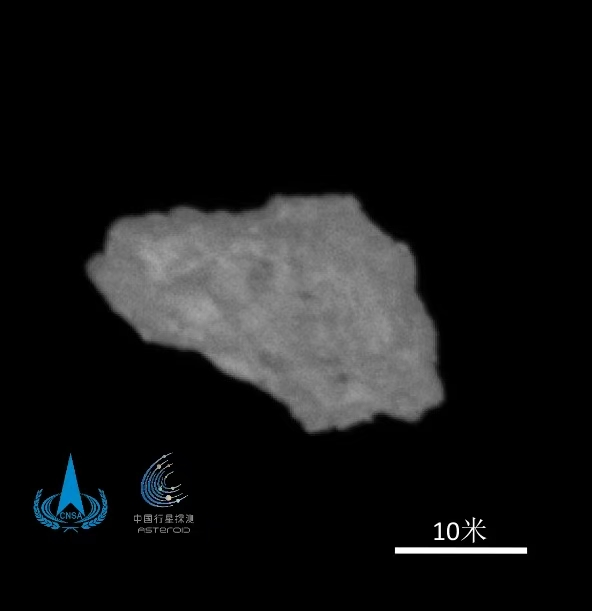
First image of asteroid Kamoʻoalewa posted by the Tianwen-2 team.

The image below was taken on July 2, 2026 from a distance of ~20 km.

The spacecraft is probably not in orbit around the small asteroid at this distance, it is just staying close to it.

The scale bar label 10米 means 10 meters.

xinhuanet.com/20260706/eb8cbec
Credit: China National Space Administration
5/n

Image of asteroid 2016HO3 (69219 Kamoʻoalewa)
ALT