Replying to @ajroach42@retro.social
I have ideas about all of these things, of course, but we haven't had to try and solve those problems yet.
Unless something goes very wrong, we'll be solving those problems this month.
@ajroach42@retro.social
Trying to reshape the future of television.
I write and build stuff.
Est. 1990. (He, Him, Etc.)
Original posts CC-BY-SA 4.0 - Share them, but link to the original.
Replying to @ajroach42@retro.social
I have ideas about all of these things, of course, but we haven't had to try and solve those problems yet.
Unless something goes very wrong, we'll be solving those problems this month.
Replying to @ajroach42@retro.social
Anyway, we still have some stuff to figure out before I can be confident that we'll be able to keep making toys indefinitely.
The biggest thing is one remaining production hurdle that I hope to resolve in the next three weeks.
After that, it's distribution, marketing, and logistics.
Who will sell our toys, who will buy our toys, how we will get our toys to those people?
Replying to @ajroach42@retro.social
But expensive is relative, cheap is relative.
Our little rubber toys are $6. The closest toy from a major manufacturer would be the Super 7 Keshi Surprise blind boxes, and those are also $6 or sometimes slightly more. The closest toys from indie manufacturers tend to be $10 (and either fundamentally worse because they are actually resin cast, or produced in much larger quantities than ours to take advantage of economies of scale that we haven't tried to approach yet.)
Our jointed action figures are mostly $20, which is roughly the same price as a Reaction figure from Super 7 (which is considered an "expensive" figure in the mainstream toy world, for what it is) and also roughly the same price as the smaller jointed figures produced in the GLYOS corners of the art toy world.
There are certainly cheaper toys out there, but there are also significantly more expensive toys that aren't, on a technical level at least, any better than ours.
Replying to @ajroach42@retro.social
We make toys, and we make them cheap.
(We, in this case being me and sundog and my wife and @MannycartoonStudio and Wanda-Sue and occasionally a few other people, working under the name @MountainTownToys)
I sell little rubber toys (made from industrial byproducts and leftovers from industrial manufacturing, mostly) and little action figures (made with a blend of new plastics and plastics recycled from our cafe) and they are, mostly, inexpensive.
Comics to toys to games to animation.
We do it ourselves! (The cartoons are in the works, and they're going to be Good!)
But helping other small creators do this is absolutely the dream.
Replying to @ajroach42@retro.social
To summarize that thread without having to dig it up:
- Comics were better when they were cheap.
- Comics can be cheap if they're printed cheaply
- A black and white, digest sized, 26 page comic book would cost less than 40 cents to produce at scale (and if you sacrifice some of those pages to advertising you can subsidize the cost of printing the comics to the point that they can be sold for $1 with the wholesaler, the retailer, and the artists all still turning a small profit per issue)
- (I said "at scale" above, and meant 5000 copies. At 50,000 copies it gets even cheaper per issue, basically just coming down to shipping costs. )
- Cheap comics can serve as an introduction to characters who can then go on to live in toys, cartoons, live action series, video games and more.
I've been semi-seriously exploring the Comic Book ideas I was posting about from the car a few weeks ago.
Replying to @ajroach42@retro.social
It's probably possible to use a generative audio application in a human augmentation way, but the tools that exist right now are clearly intended to automate the people out of the creative process and, as far as I can tell, any use of these applications serves to further that goal.
So even if you can over look the stollen creative labor (and you shouldn't) or the runaway resource utilization (and you shouldn't) and the obvious economic fraud (and you shouldn't) in the name of agency or accessibility, I think it's important to reckon with the fact that access to these applications today is predicated on their eventual use in place of human produced music tomorrow.
Replying to @ajroach42@retro.social
In this particular case, we were in nuance territory. The person in question was writing music and performing vocals and then generating parts and exporting stems from a generative AI music imitator to produce something they considered a prototype or sketch of the finished track.
That, on the surface, doesn't sound all that different from me firing up garage band and sticking an autodrummer behind a track I wrote, or using a vocoder for vocals, or playing to a drum machine.
and I imagine that some folks, myself included when I first encountered this argument, might struggle to articulate what makes it different.
Resource utilization, certainly. Trained on stollen labor, for sure.
Those are problems, but they aren't the biggest problem I have.
The biggest problem that I have is that Suno and tools like it are trying to replace the act of making music. They are only being positioned as music creation tools for individuals for as long as it takes them to get good enough that most people can't tell the difference, and the people using these tools are paying for the privilege to train that machine.
When the training is done, the people get cut out, and the market get flooded with slop that's good enough that most people will struggle to recognize it.
(This is already happening. It will get worse.)
Garage band can't spit out a song without human interaction. Suno can.
It's the difference between human-machine augmentation and machine automation.
Replying to @ajroach42@retro.social
I bring all that up, because it's an argument I see over and over again, it's one of the places (perhaps the only place?) for nuance in this conversation and I've seen that point abused and dismissed on both sides of this conversation.
Some folks who I otherwise agree with seem to hold that anything that gets bundled under the label AI or that involves ML is inherently evil and wasteful (I disagree) and other folks who I generally disagree with seem to hold that, because there are things labeled AI or ML that aren't evil and wasteful, there thing must therefore be okay (I disagree!)
Replying to @ajroach42@retro.social
Well, that's one of the things that make it dangerous anyway.
Replying to @ajroach42@retro.social
So yes, there are things called AI that I think are fine, because they help me do a mechanical thing faster (transcription, rotoscoping) and can be run on my local machine, and mostly aren't powered by stolen creative labor.
But these things are fundamentally different from what (in my experience, most) people mean when they say AI.
What (in my experience, most) people are railing against is Automated Slop Generation trained on the output of real people.
Image generators, music generators, text generators.
"Tools" designed to mimic human creativity and produce something that is designed to trick people.
Generative AI is a machine for producing something that seems plausible for a given input. That's all it can do, and that's what makes it dangerous.
Replying to @ajroach42@retro.social
Often, when I find myself getting roped into a conversation about generative AI, and the ways that it is bad, people will either point at these technologies to call me a hypocrite or they'll use these technologies (and a couple of similar ones) to justify that "AI" can be good and ethical and so, because "AI" can be good and ethical in general, their specific use case must also be as well.
This is marketing fluff.
Replying to @ajroach42@retro.social
I also occasionally use image classifiers to sort through large volumes of photos or scans or whatever because going through them by hand would take a lifetime, and some large corporations already taught computers to do this. This makes some of my research and art projects much faster, and can again be run locally and generally doesn't involve any stolen labor (at least no more than we've been giving away to solve captchas)
I'm planning to set up a particular image classifier that is designed to specifically extract foreground images from solid color backgrounds, to provide a clean chromakey for footage that was not filmed against a properly lit green screen.
Again, it's not generating anything new, it's automating manual labor away, and letting me focus on the creative part of video production, rather than rotoscoping a person out of their background over and over again.
I think this is great!
I don't think it's really fair to call either of these things "AI" in the way that we talk about "AI" right now, but they are both built on machine learning, and ...
I have a point, give me a second.
Replying to @ajroach42@retro.social
There are a couple of places that I still use or have used or plan to use things that are commonly rolled up in the "AI" bucket, and that I believe are fine.
Because "AI" is a bunch of different technologies built a bunch of different ways, wearing a marketing trenchcoat.
I use an automatic subtitle generation tool that is "AI" powered, but runs locally and isn't generating anything new, it's trying to identify a thing that already exists.
The argument could be made that it was trained on stolen labor in that it was trained by matching existing subtitles to the audio tracks those subtitles correspond to. I decided I was personally comfortable with this, but I understand how other people might not be.
It's wrong a lot, but it gives me a place to start from as I'm manually subtitling a thing, and saves me hours of transcription work.
I think it's fine. I think it's good even, I like it and I want it to get better.
Replying to @ajroach42@retro.social
When Generative AI hit the scene, it took me a really long time to make up my mind about it. Some people around me were (rightly) immediately against it, but I didn't fully understand why.
I played with early image generators because I found the results amusing. I was running stable diffusion locally, because I had a machine that could do that. I tried to convince myself that there were places that this tech could be used ethically. I tried to justify it.
I tinkered with early LLMs, partially because I found the results amusing and partially because (like many other people in the tech world) I saw in them the promise of a thing that I had long dreamed about and couldn't really articulate. (I was wrong! That promise is not there. These are machines built to look useful while doing nothing.)
And, in the meantime, I learned a lot about how these things work.
I've seen inside the sausage, I've eaten the sausage. I can say without question, that the sausage is made of people and sewage, and we're just hurting one another and ourselves when we eat it.
But there's nuance here, and I want to get into that for a second.
Replying to @ajroach42@retro.social
So, first, I suspended the person in question from this server, because he chose to follow me (after sending a dozen or more comments) *after* I asked him to leave me out of his GenAI evangelizing.
He called my stance against AI virtue signalling, so I figured we could talk about that.
I've got a dude arguing in the comments on one of my posts that he has to use AI to produce music because he doesn't have the money to do anything else, and that if we really think he shouldn't be using AI, we should give him some money to hire musicians.
...
This gets into some territory that I feel like I gotta dissect.
First, musicians /should/ get paid for their work.
Second, GenAI "music" more or less guarantees that the musicians who's work was stolen to produce that "music" are not getting paid.
Third, "Generative AI' is such an overloaded term that it's easy for lots of things to get wrapped up in the bucket that mean different things, and that makes talking about it difficult.
I don't want this to be a big thread, I don't want to be talking about Generative AI at all, but I've been ragebaited, so let's chat.
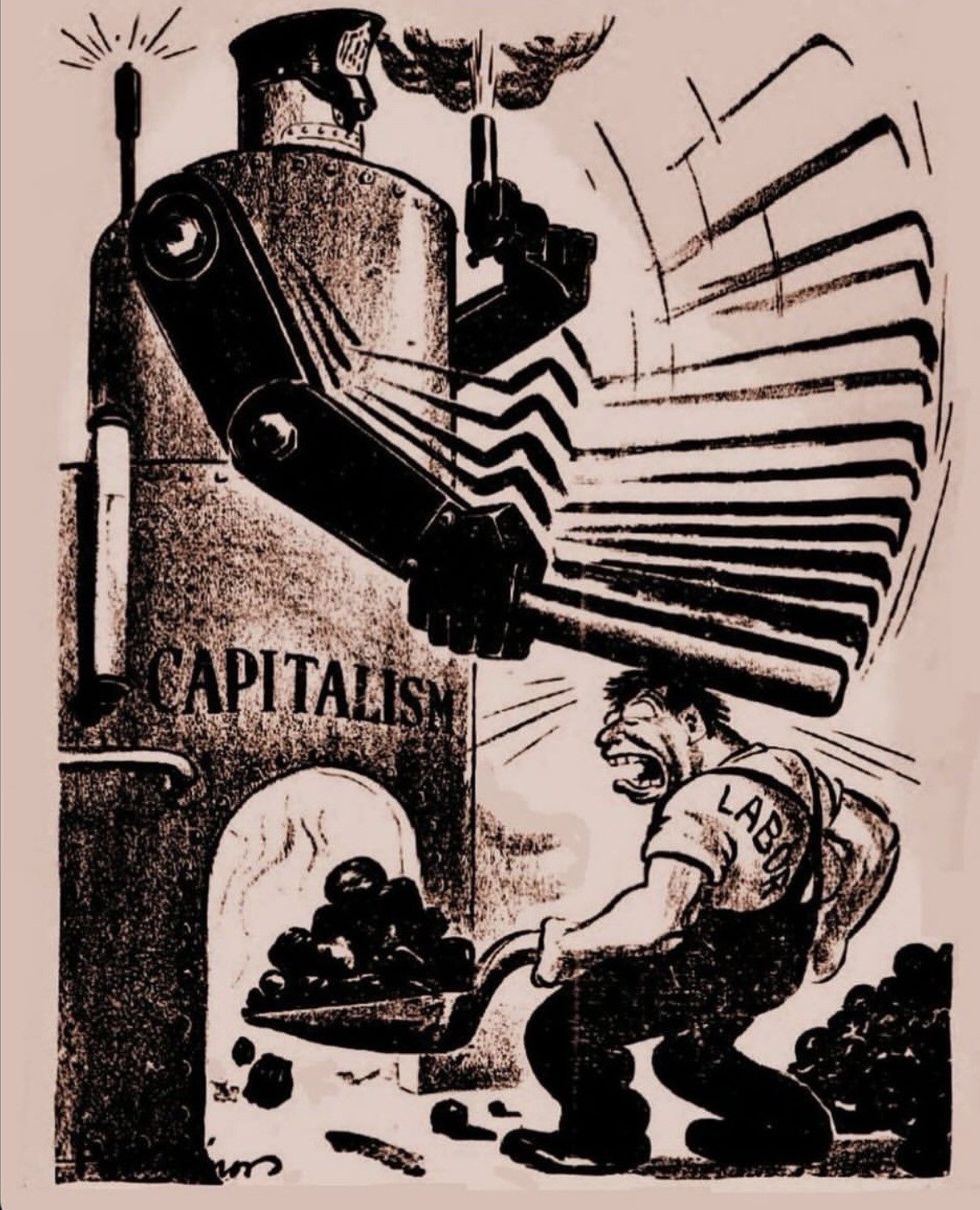
Here, have some better propaganda