@NellytheWillow @Vibracobra23 excuse the poor quality photo, but I saw the same stonework 'cone' yesterday in Monmouth!
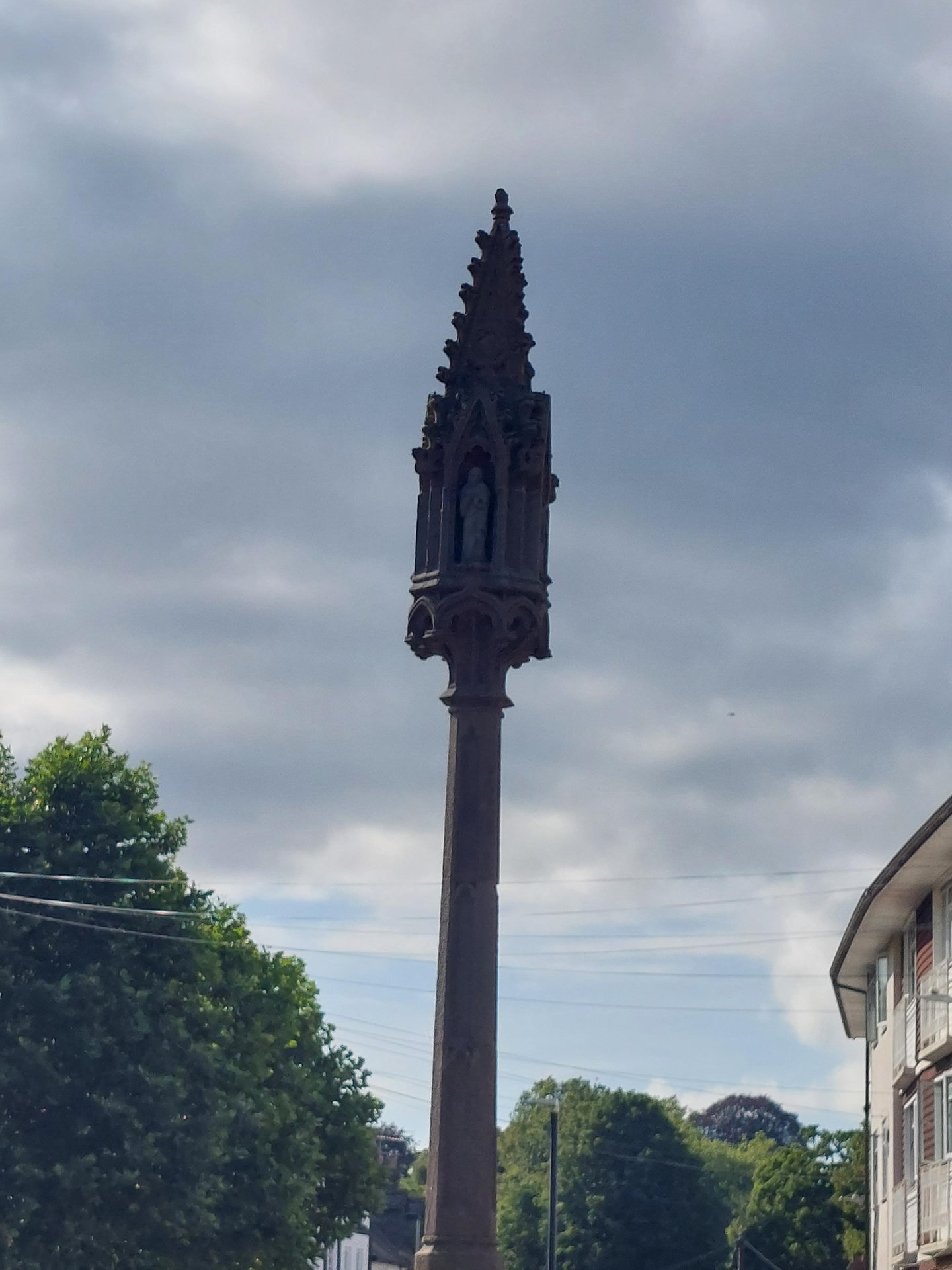
@NellytheWillow @Vibracobra23 excuse the poor quality photo, but I saw the same stonework 'cone' yesterday in Monmouth!
Replying to @2ruth@mastodon.social
@2ruth @Vibracobra23 Wow! Thanks. Interesting. I think this type of pinnacle is fairly widespread on churches but this is something different. Do you know what it is? It could be some sort of ancient 'cross' but without context it's difficult to say.
Replying to @NellytheWillow@mastodon.social
@2ruth @Vibracobra23 I've now found there's a Wikipedia entry for it, though I haven't read it all yet, but it is thought to have an ancient history:
 en.wikipedia.orgThe Cross, Monmouth - Wikipedia
Replying to @2ruth@mastodon.social
@NellytheWillow @chris @Vibracobra23 for some reason (I'm not quite sure why) it's the actual design of the pinnacle that intrigues me - and it's why it caught my eye after seeing the original post, the Stratton arch. It looks sort of Indian or Thai to my untrained eye, and I wonder if there's a significance to the design.

Replying to @chris@olsberg.social
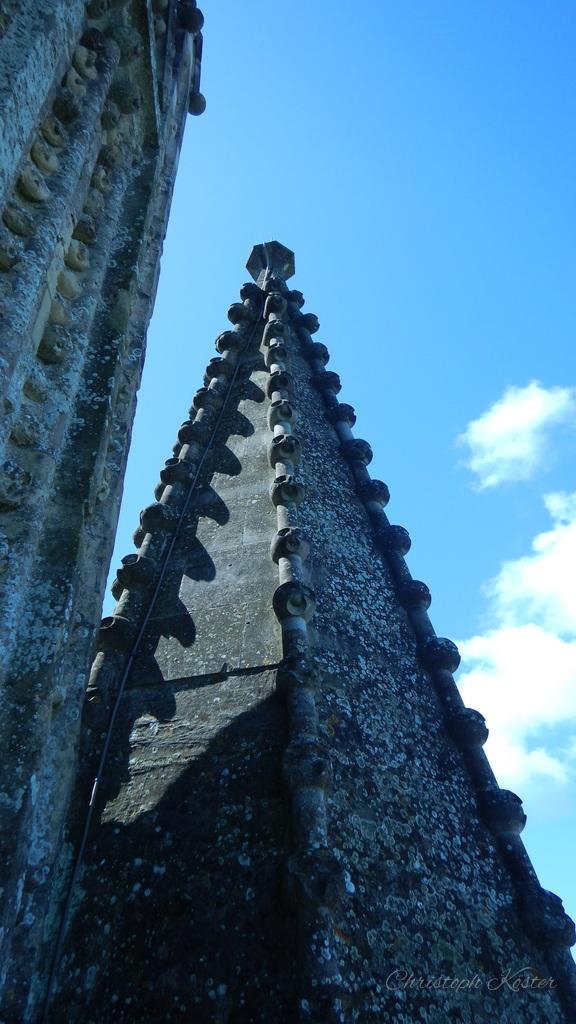
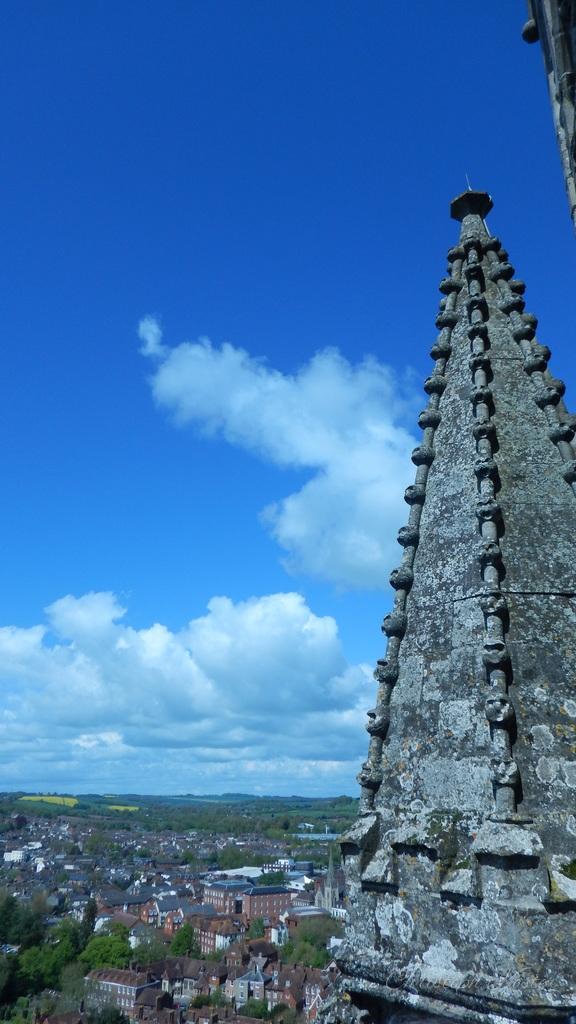
@2ruth @NellytheWillow @Vibracobra23 Here’s #SalisburyCathedral – to me, the tops of the market crosses look similar – just a bit smaller...
Replying to @NellytheWillow@mastodon.social
@NellytheWillow @Vibracobra23 I think it was a cross (though not the conventional one!) It was in the road junction outside the rather lovely St Thomas a Becket church in Monmouth
Replying to @2ruth@mastodon.social
@2ruth @Vibracobra23 Oh that's very interesting. It sounds like something found in Cornwall that's known as a lantern cross (which isn't a cross either) that has carved scenes from Christ's life. This one seems to have niches with figures in them.
Replying to @NellytheWillow@mastodon.social
@NellytheWillow @2ruth @Vibracobra23
Sorry to butt in, but I’m really interested in this.
The Cross in Monmouth was the centre of urban life in the Middle Ages. Markets were held here, traders sold their goods, and townspeople gathered. It was also used for public announcements and minor court proceedings.
As a market cross, It had religious significance. It symbolised Christian order and was used for sermons and processions. It also reflected Monmouth’s civic rights and economic standing.
Replying to @NellytheWillow@mastodon.social
@NellytheWillow @2ruth @Vibracobra23
Similar market crosses existed across Britain, such as in Chichester, Malmesbury, and Edinburgh. They served as focal points for trade, justice, and official proclamations, shaping public life in medieval towns.
Replying to @NellytheWillow@mastodon.social
@NellytheWillow @2ruth @Vibracobra23
In my region (Westphalia, Germany), it is well documented that during the Christianisation of the Saxons by the Franks, many formerly pagan sites (places of worship, assembly sites, etc.) were transformed into and adapted as Christian sites. Perhaps that is also the case here — just my own speculation.
There is a very interesting book on this subject, but unfortunately it is only available in German...
https://bibliothek.rzgierskopp.de/index.php?title=Der_Himmel_ist_unter_uns
 bibliothek.rzgierskopp.deDer Himmel ist unter uns – Bibliothek
Replying to @chris@olsberg.social
@chris @2ruth @Vibracobra23 Yes, these crosses held both religious and community significance, and, as you say, are found all over the country. You could be right about pagan sites changed into Christian ones may include market crosses, although I'd have thought they originated in later medieval rather than pre-Christian times, with the development of towns and civic activity.
Replying to @NellytheWillow@mastodon.social
@NellytheWillow @2ruth @Vibracobra23 Yes, the pagan significance is pure speculation – but Christianity often made use of existing infrastructure – and culture! For example, pagan gods were also transformed into saints to make conversion easier for the pagans.
You’re right – there’s no evidence of that specifically for the market crosses.
Perhaps the Church wanted to have a presence in the central locations of public life.
Replying to @NellytheWillow@mastodon.social
@NellytheWillow @chris @Vibracobra23 It's a fascinating subject and I've long been aware of the Christian overlaying of more ancient sites ... I don't know enough factually/academically, and I can see that the marketplace as we know it would perhaps be late medieval, rather than pre-christian, but there would nonetheless have been trade ... ahhh I don't know! I'm really just recently delving into the actual history of Britain to augment a vague understanding and a kind of felt sense!
Replying to @2ruth@mastodon.social
@2ruth @NellytheWillow @Vibracobra23 I suspect that the builders and restorers drew inspiration from Gothic architecture, where such structures are often found (see, for example, the spires of Gothic cathedrals).